
Today, let’s go back to ancient times to know about the history of Korea, to know the journey from a kingdom to the formation of modern Korea.
In 2333 BCE, Gojoseon was the first Korean kingdom founded by the Dangun ( founder and first king of Gojoseon, also known as grandson of heaven) located in the north of the peninsula and Manchuria. Koreans commonly believed that Dangun bestowed upon Korea and its people and Gija the prince of Shang dynasty of China, gave Korea its high culture. Koreans celebrate Dangun founding of Gojoseon on 3 October as a national holiday known as National Foundation Day (Gaecheonjeol). It is a religious anniversary worshipping Tan’gun, another name of Dangun.The history of Gojoseon kingdom was first mentioned in the Chinese records.
Three Kingdoms of Korea
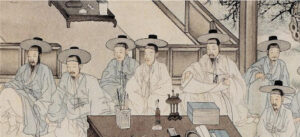
By the 1st century BCE, the peninsula was dominated by three major kingdoms – Goguryeo, Baekje & Silla.
Baekje was founded in 18BC by King Onjo (son of King Jumong, founder of Goguryeo) located in Southwestern Korea. Baekje had the highest population among the three kingdoms . Baekje with Goguryeo and Silla, the three kingdoms of Korea expanded control over the peninsula. Baekje controlled most of the western Korean peninsula.
Goguryeo was one of the great powers in East Asia. Goguryeo, later known as Goryeo (source of the modern name of Korea) founded in 37BC located on the northern and central parts of the Korean peninsula and the southern and central parts of modern day Northeast China (Manchuria). Goguryeo attacked the Chinese to cut off their access and end their presence in Korea and succeeded. Goguryeo experienced a golden age under Gwanggaeto (19th monarch of Goguryeo) and Jangsu ( Son of Gwanggaeto & 20th monarch of Goguryeo).
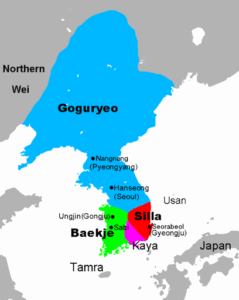
Silla was founded in 57BC and located on the southern and central parts of the Korean peninsula. Silla was smaller than Baekje and Goguryeo nevertheless conquered the other two kingdoms, Baekje in 660 and Goguryeo in 668. Thereafter, Unified Silla (the historical period of the Korean kingdom) occupied most of the Korean peninsula which marked the end of the Three Kingdoms period.
Goryeo Dynasty
Goryeo was a Korean state founded in 918 by Wang Kŏn, during a time of national division called the Later Three Kingdoms period that unified and ruled the Korean Peninsula until the establishment of Joseon in 1392. Goryeo and unified Silla was known as the “Golden Age of Buddhism” in Korea. As the state religion, Buddhism achieved its highest level of influence in Korean history with 70 temples in the capital alone in the 11th century. Goryeo was a period of great achievements in Korean art and culture.
Joseon Dynasty
The Joseon Dynasty became Korea’s longest-ruling dynasty, lasting over 500 years (1392 – 1897) founded by Taejo of Joseon in July 1392 and replaced by the Korean Empire in October 1897. The era was marked as Confucian social order, Cultural achievements and strong bureaucratic systems. The most significant achievement was Hangeul, the Korean alphabet by King Sejong in 1443,which made literacy accessible to all Koreans. Joseon consolidated its effective rule over the Korean peninsula and saw the height of classical Korean culture, trade, literature, science and technology.
Korean Empire
The Empire of Korea or Imperial Korea officially was a Korean monarchical state proclaimed in October 1897 by King Gojong of the Joseon dynasty. In 1897, Korea declared itself the Korean Empire aiming to modernize the nation while safeguarding its sovereignty.However Korea was annexed by Japan and during that period, Koreans faced suppression of their culture, tradition, language and identity which led to widespread acts of resistance.
Japanese Occupation
In 1910, the Empire of Japan effectively annexed Korea through the Japan – Korea Annexation Treaty.
Japan-Korea Annexation Treaty was made by representatives of the Japanese Empire and the Korean Empire on 22 August 1910. In this treaty, Japan formally annexed Korea following the Japan-Korea Treaty of 1905 (by which Korea became a protectorate of Japan) & 1907 (by which Korea was deprived of the administration of internal affairs). In 1965 the annexation treaty was pronounced null and void.
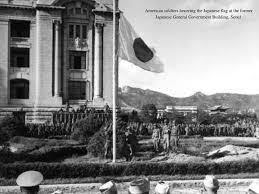
Korea was controlled by Japan under a Governor General from 1910 to 15 August 1945. The Japanese removed the Joseon hierarchy . Most of Gyeongbokgung Palace was demolished and occupied by the Government General.
Some Koreans went into exile abroad, particularly in China and the United States. In Manchuria, they formed resistance groups called Dongnipgun which carried out guerrilla operations across the Sino-Korean border against Japanese troops.
Division of Korea
The unconditional surrender of Japan in 1945 led to the end of Japan’s occupation in Korea and the division of the Korean Peninsula into two different occupation zones. The United States administered the southern half of the peninsula and the Soviet Union administered the area north of the 38th parallel. This division was meant to be temporary with plans for a unified Korea to be established under a Joint Trusteeship but the two powers were unable to agree on the terms of the trusteeship due to their different ideologies and opinions. This led in 1948 to the establishment of two separate governments with the two very opposite ideologies, the Communist-aligned Democratic People’s Republic of Korea (DPRK) and the West-aligned First Republic of Korea.
On 25th June 1950, The Korean War began when North Korean forces crossed the 38th parallel and invaded South Korea, after years of devastating conflict, it concluded on 27 July 1953 without either side achieving victory that the situation returned to the division of 1948. A Demilitarized Zone (DMZ) was set up as the border, and the two governments settled into what we now know as North Korea & South Korea.
North Korea (Democratic People’s Republic of Korea) 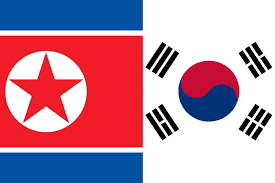
established on 9 September 1948. Due to Soviet influence, North Korea established a communist government with a hereditary succession of leadership. Kim Il Sung became the supreme leader until his death in 1994, after which his son, Kim Jong Il took power. Kim Jong Un (Kim Jong Il’s son) is the current leader, takes the power and responsibility of his father after his death in 2011.
South Korea (Republic of Korea) established on 15 August 1948, establishing a democratic government with a capitalist economy. To boost economic growth, South Korea adopted an export-oriented industrialization policy. Under President Park Chung-hee (1917–1979) the country launched a series of highly successful Five Year Plans that transformed the economy. Much of this growth was driven by chaebols, large families owned conglomerates such as Samsung, Hyundai, SK Group, and LG.
Modern Korea
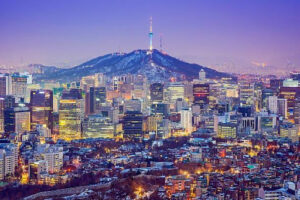
Following the devastation of the Korean War, South Korea transformed from a primarily agricultural society to one of the world’s leading economies, often called the “Miracle on the Han River.
Culturally, South Korea has gained global recognition through the “Hallyu” which includes K-pop, K-dramas, and Korean food influencing the world. The country is also known for its modern cities like Seoul and Busan and advanced cutting-edge technology including high-speed internet and smart infrastructure.
Politically, South Korea is a democratic republic with active civic participation and strong ties to global powers especially the United States. At the same time, tensions with North Korea remain a significant part of its national security concerns.
Unlike South Korea, North Korea follows a state controlled economy, focusing on heavy industry, mining, and military production while limiting private enterprise. Economic development has been slow compared to South Korea and the country faces challenges such as limited Internet, networking and limited access to global markets. North Korea is known for its strict government control over daily life including media, education and travel.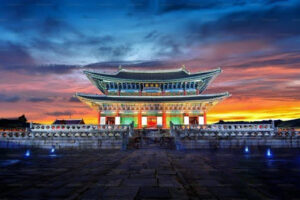
The country maintains a strong military focus including nuclear weapons development. Despite isolation, the regime promotes a unique national identity rooted in Juche or self-reliance ideology, emphasizing loyalty to the state and its leaders.
Culturally, North Korea preserves traditional Korean customs but public cultural life is heavily influenced by government messaging, including parades, art and performances that honor the state and its leaders. Relations with the outside world remain tense with limited international engagement though occasional diplomatic efforts occur.

Korea’s history is a story of ancient civilizations, dynastic rule, foreign occupation and eventual division into two nations. Despite political separation, North and South Korea share language, culture and heritage. The Korean Peninsula’s history stands out as a remarkable tale of resilience, identity and transformation. Knowing this journey of Kingdom to Korea allows a better understanding of the current interactions and status of both nations in the world.
Article by Sonali Choudhary