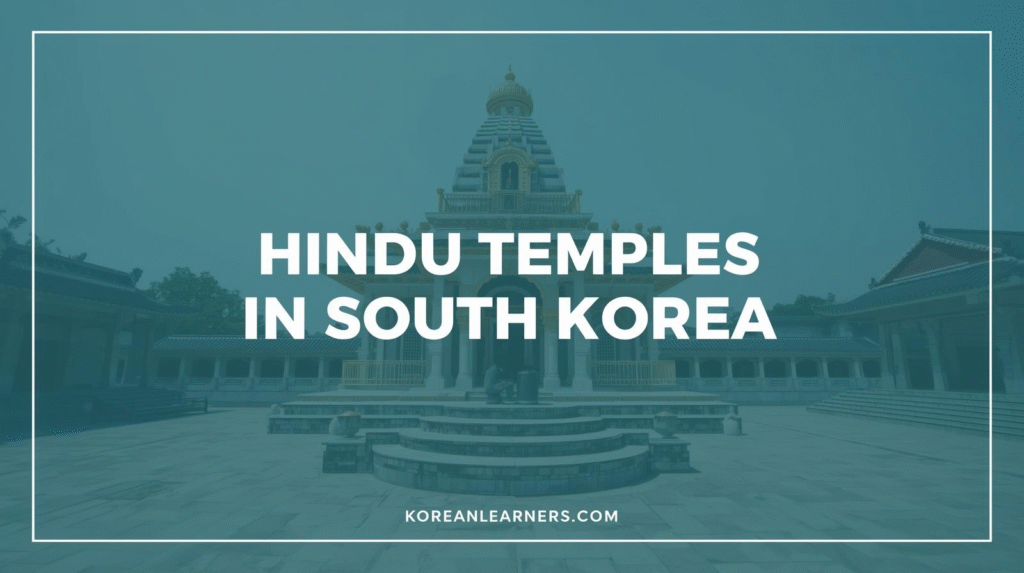

The Republic of Korea’s spiritual landscape is often associated with Buddhism, Christianity, and native shamanic traditions, yet over the past two decades, a small but vibrant network of Hindu temples and cultural centres has quietly taken root. These temples are not just places of worship for South Asian expatriates. They’ve also become quiet meeting points where curious Koreans discover Vedic philosophy, join in yoga or chanting, and experience Indian festivals.
Sri Radha Shyamasundar Mandir, Haebangchon 해방촌, Seoul
At the heart of Seoul’s international neighbourhood Haebangchon (해방촌) lies the Sri Radha Shyamasundar Mandir, today recognised as the capital’s most well-known Hindu temple. Its story begins in 2008 when Kamala Roy, an Indian woman, transformed her apartment gatherings into a spiritual community. What started as small prayer meetings blossomed into the temple known today. Every Sunday, the mandir comes alive with bhajans, fairy lights, samosas, and Sunday feasts. Children study Bal Vikas, adults join Bhagavad-Gita classes, and devotees gather for grand Diwali (दीवाली) and Janmāṣṭamī (जन्माष्टमी) celebrations. The temple opens morning and evening for darśan (spiritual viewing of deities) and has become both a spiritual refuge and cultural living room for South Asians in Seoul.
ISKCON Pocheon Temple, Uijeongbu 의정부 북쪽
A short drive north of Seoul, near Uijeongbu (의정부), stands the ISKCON Pocheon Temple, established in 2003. Since its foundation, the temple has echoed with mantras and devotional songs, hosting grand festivals such as the Jagannath Rath Yatra and Sri Krishna Janmashtami. After years of waiting for permits, the temple was renovated in 2019 with a new altar, temple hall, pujari rooms, a kitchen, and improved guest facilities. Today, it is preparing for an even more ambitious project. A new, larger temple to house Sri Sri Radha Krishnachandra. This reflects its growing importance in Korea’s multicultural spiritual landscape.
(Source: ISKCON Korea)
Sri Lakshmi Narayanan Temple, Seoul
In metropolitan Seoul, the Sri Lakshmi Narayanan Temple (스리 락슈미 나라야난 사원) adds another dimension to Hindu presence in Korea. Dedicated to Lord Viṣṇu and Goddess Lakshmi the temple offers regular worship services, Vedanta discussions, and yoga sessions. For South Asian families, this temple creates a sense of belonging, while for curious Koreans, it offers a gateway into Hindu culture. Major festivals, traditional rituals, and cultural activities keep alive the Indian spirituality in the heart of Seoul.
Himalayan Meditation and Yoga Sādhana Mandir, Seocho 서초
Not all centres resemble traditional South Asian mandirs. In Seocho (서초), the Himalayan Meditation and Yoga Sadhana Mandir (히말라야 명상과 요가 사원) affiliated with the AHYMSIN network focuses on breath-work, mantra meditation, and silent retreats rooted in Himalayan spiritual traditions. Initially created for the Indian and Nepali community, the centre has increasingly attracted Korean professionals seeking spiritual depth amid the pressures of modern life. Programs include teacher training, guided meditation classes, and short retreats, bridging ancient Himalayan wisdom with modern wellness practices.
These temples are not just for Hindu, they have become cultural bridges. During Diwali, Koreans walk in to witness the light-filled celebrations. During the Rath Yatra, processions move along the Han River (한강), inviting people of all backgrounds. Yoga students often stay back for the free vegetarian dinners, finding nourishment not just for the body but also the soul.
In a fast-paced city like Seoul, these temples create something rare slow conversations, shared food, and global community spirit.