
In Korean culture, harmony, civility, and respect are valued. Beginners may find Korean etiquette difficult, but once you grasp the fundamentals, it becomes easy and natural. In order to encourage confident conversation, this guide is intended to help people who are studying the language, making travel plans, or meeting Korean friends.
You can avoid mistakes and create better, more fulfilling relationships by knowing how to greet people appropriately, act with respect, and follow basic manners. Developing an understanding of these traditions also enhances your love of Korean society and allows more meaningful and seamless interactions. Knowing these basic rules can make you feel more at ease and self-assured in any Korean environment, whether you are a student, tourist, or followers of K-culture.
Bowing
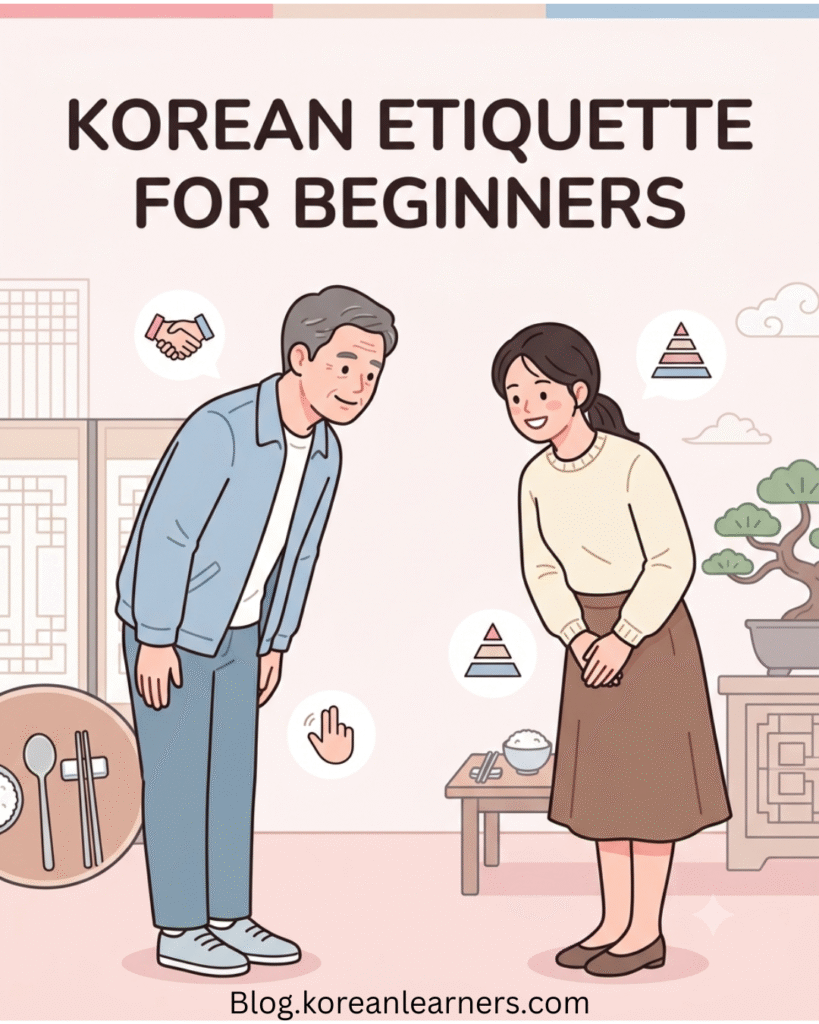
In Korea, bowing is the most common way to greet others, show thanks, and show respect. Instead of shaking hands immediately, most people bow first.
Types of bows you should know:
A light bow is a slight forward bend of the upper body. It is used for casual, everyday situations such as entering a shop, greeting someone briefly, or saying a simple thank you.
A polite bow is a more noticeable bend from the waist. It shows polite and formal respect and is commonly used for teachers, elders, or anyone older than you.
A deep bow is a long and deep bend of the body. It is used in serious situations, such as making a strong apology, expressing deep gratitude, or during important ceremonies.
Bowing tips:
- Keep your back straight and eyes lowered.
- Bow silently first, then speak after standing upright.
- Bow slightly when giving or receiving anything like gifts, money, or documents.
Table Manners
Food is a very important part of Korean culture. Meals are often shared and eaten together, so there are many small rules to keep harmony.
Important Korean table rules:
- Wait for the oldest person to start eating, as this is an important rule that shows respect and patience.
- Don’t lift your bowl while eating, because unlike Japanese culture, Koreans keep their bowls on the table.
- Use your spoon and chopsticks correctly by using the spoon for rice and soup, the chopsticks for side dishes, never stabbing food with your chopsticks, and never sticking them upright in rice because it symbolizes death.
- Pour drinks with two hands, use both hands when pouring for an older person, and also hold your cup with both hands when receiving a drink.
- Don’t blow your nose at the table; if you need to, go to the restroom because blowing your nose while eating is considered rude.
- Take small portions first, because Korean meals have many side dishes, and it is polite to take a little at the beginning and then take more later.
Greetings
Korean greetings change depending on age and relationship, and Koreans use polite language with almost all strangers and older people. You should speak politely when talking to elders, strangers, teachers, bosses, and anyone who is older than you.
Basic polite greetings:
- 안녕하세요 (Annyeonghaseyo) – Hello (polite)
- 안녕히 가세요 (Annyeonghi gaseyo) – Goodbye (when the other person leaves)
- 안녕히 계세요 (Annyeonghi gyeseyo) – Goodbye (when you leave)
- 감사합니다 (Gamsahamnida) – Thank you
- 죄송합니다 (Joesonghamnida) – I am sorry (very formal)
Respect for Hierarchy
When meeting new individuals, it is better to use respectable titles like “Mr./Ms.” or Korean titles, as these indicate both intimacy and respect until they tell you otherwise. This is because age plays a significant part in Korean society, and even a 1-2 year age gap can influence how people speak and act.
How hierarchy affects behavior:
- Younger people speak politely to older people.
- The oldest person at the table starts eating first.
- When giving a drink to an older person, use two hands.
- You avoid calling older people by only their name.
Common respectful titles:
- Seonsaengnim – Teacher
- Sajangnim – Boss
- Unni / Oppa – Older sister/brother (used by women)
- Hyung / Nuna – Older brother/sister (used by men)
- Sunbae – Senior in school, or workplace
Social Gestures
Koreans expect gentle and respectful behavior in public because even small actions carry big meaning, so using two hands shows politeness, and if one hand is busy, lightly touching your forearm or chest with your free hand also shows respect.
Use two hands for important actions
- Giving or receiving gifts
- Passing money
- Receiving drinks
- Handing documents
Avoid these actions:
- Pointing with one finger – Use your whole hand.
- Touching someone’s head – Considered too personal or disrespectful
- Loud talking in public places – Koreans prefer quiet behavior on buses, trains, and restaurants.
- Too much physical contact – Hugs or touching may feel uncomfortable unless you are close friends.
In Korea, where individuals tend to avoid direct conflict, body language is important. Good manners include speaking softly, making gentle gestures, and acting calmly. Respect is the foundation of Korean etiquette: respect for your age, respect for your personal space, and respect for others around you. You don’t need to be perfect as a beginner; even simple gestures like using two hands, speaking politely, or bowing slightly can make a big impact. You will become familiar with Korean culture, communicate more easily, and form stronger bonds with Koreans if you understand and follow these basic guidelines. Eventually, these habits will come naturally to you and boost your confidence in any Korean social situation.